The clinical toolkit,
in plain language.
01
Our two clinical foundations
Every plan at Equilibrium is built on two of the most rigorous approaches in rehabilitation: Functional Manual Therapy® and Dynamic Neuromuscular Stabilization. Both look beyond the site of pain to how your whole body moves and how your nervous system controls it. Together, they give us a precise way to find the true source of your problem and resolve it. When your case calls for more, we bring in additional advanced methods.
Functional Manual Therapy® (FMT) — Institute of Physical Art
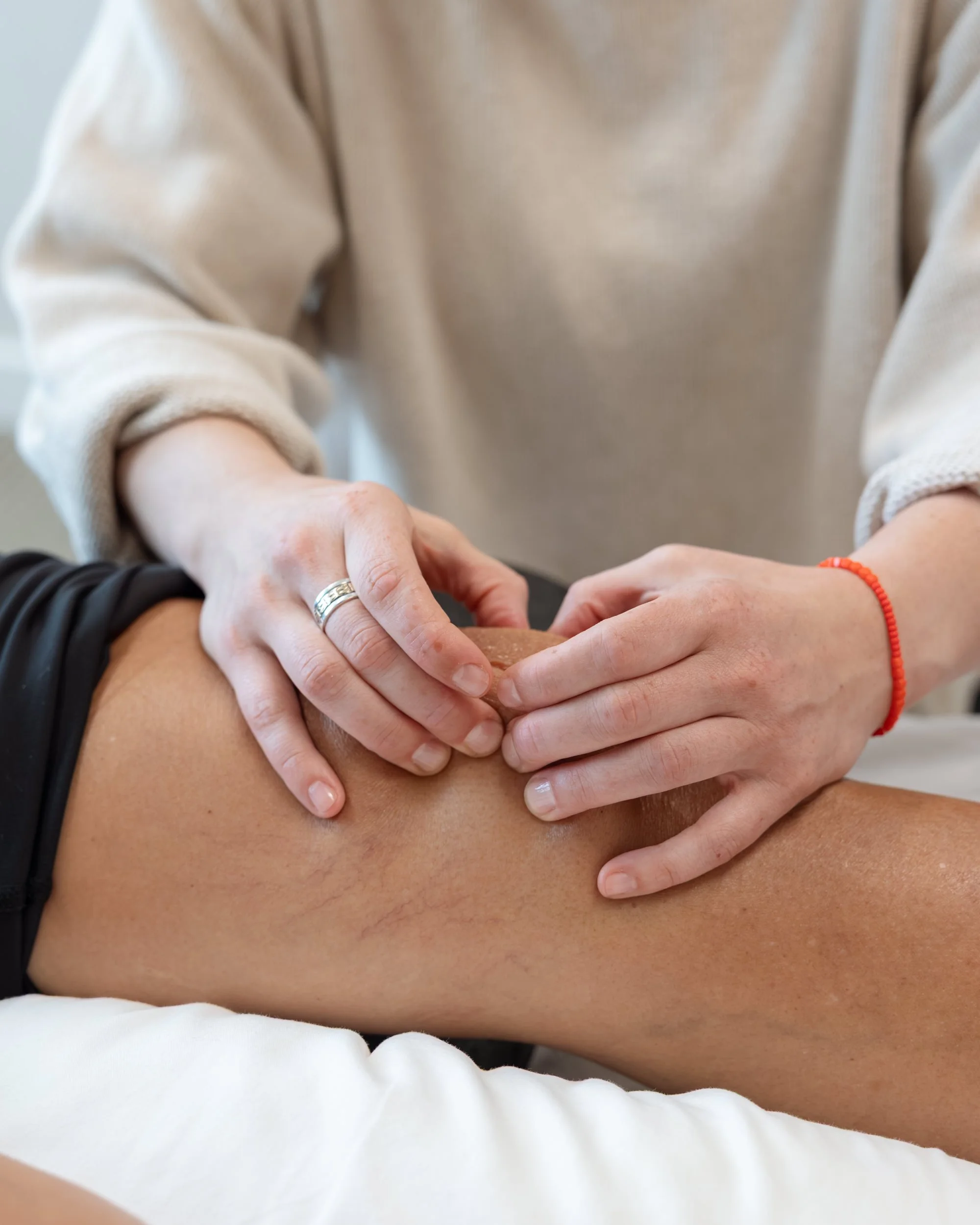
Developed by the Institute of Physical Art, FMT integrates three things most approaches treat separately: how your joints and tissues move, how your muscles respond, and how you control movement as a whole. Your therapist uses skilled hands and close observation to find what is restricting you, treats it directly, and then trains your body to use that new freedom in the movements that matter to you. Every physical therapist at Equilibrium has completed intensive FMT training.
Dynamic Neuromuscular Stabilization (DNS) — Prague School of Rehabilitation
Developed by Professor Pavel Kolář at the Prague School of Rehabilitation, DNS is built on a simple insight: the movement patterns you developed as an infant (breathing, rolling, crawling, standing) are wired into your nervous system. When pain or injury disrupts them, your body compensates. DNS draws on these patterns to restore deep stability through your breathing, spine, and joints, so that strength and performance rest on a sound foundation. Our clinic is led by a Certified DNS Practitioner, and every therapist applies DNS principles in care. You can check out this introductory video to DNS.
02
Additional methods we draw on
-
What it is
Solid filament needles into trigger points, motor end-plates, or myofascial restrictions to release trigger points, reduce pain, and restore normal muscle function. Used within a complete plan of care, it can speed progress where hands-on work alone stalls. Provided exclusively by our clinician who is certified in dry needling.
When we use it
Targeted myofascial pain, persistent trigger points, and post-surgical scar restriction. Always paired with movement — needling alone is incomplete.
( Certified · AAMT )
-
What it is
Your swing can only be as good as your body allows. A TPI screen identifies the physical limitations in mobility, stability, and control that drive swing faults, lost distance, and golf-related pain. We then treat those limitations directly, so your body can produce the swing you’re working toward.
When we use it
Golfers — recreational through scratch — and any rotational-sport athlete (tennis, throwing, racquet) where the kinetic chain is the asset.
( Certified TPI medical )
-
The human body isn’t symmetrical. Your organs, diaphragm, and breathing are naturally weighted to one side, and most people develop predictable patterns as a result. The Postural Restoration Institute’s approach uses targeted breathing and positional exercises to rebalance these patterns, reduce strain, and restore efficient movement.
-
Muscles and joints aren’t the only structures that can lose mobility. Your organs and nerves also need to glide freely within the body. Developed by French osteopath Jean-Pierre Barral, these gentle, precise hands-on techniques restore that mobility and motility. We use them when restriction in these tissues may be contributing to pain or limited movement. description
Our clinicians have completed advanced coursework in the following approaches and integrate them when your case calls for it.
How it comes together.
Your body is built to heal. Our job is to find what’s getting in its way. No two plans look the same, because no two bodies do.
Your history, how you move, how you breathe, and how your body handles load. Not just where it hurts.
01 — We look at everything.
Restricted tissue, poor stability, inefficient patterns. Usually more than one, and often far from the site of pain.
02 — We find what’s driving it.
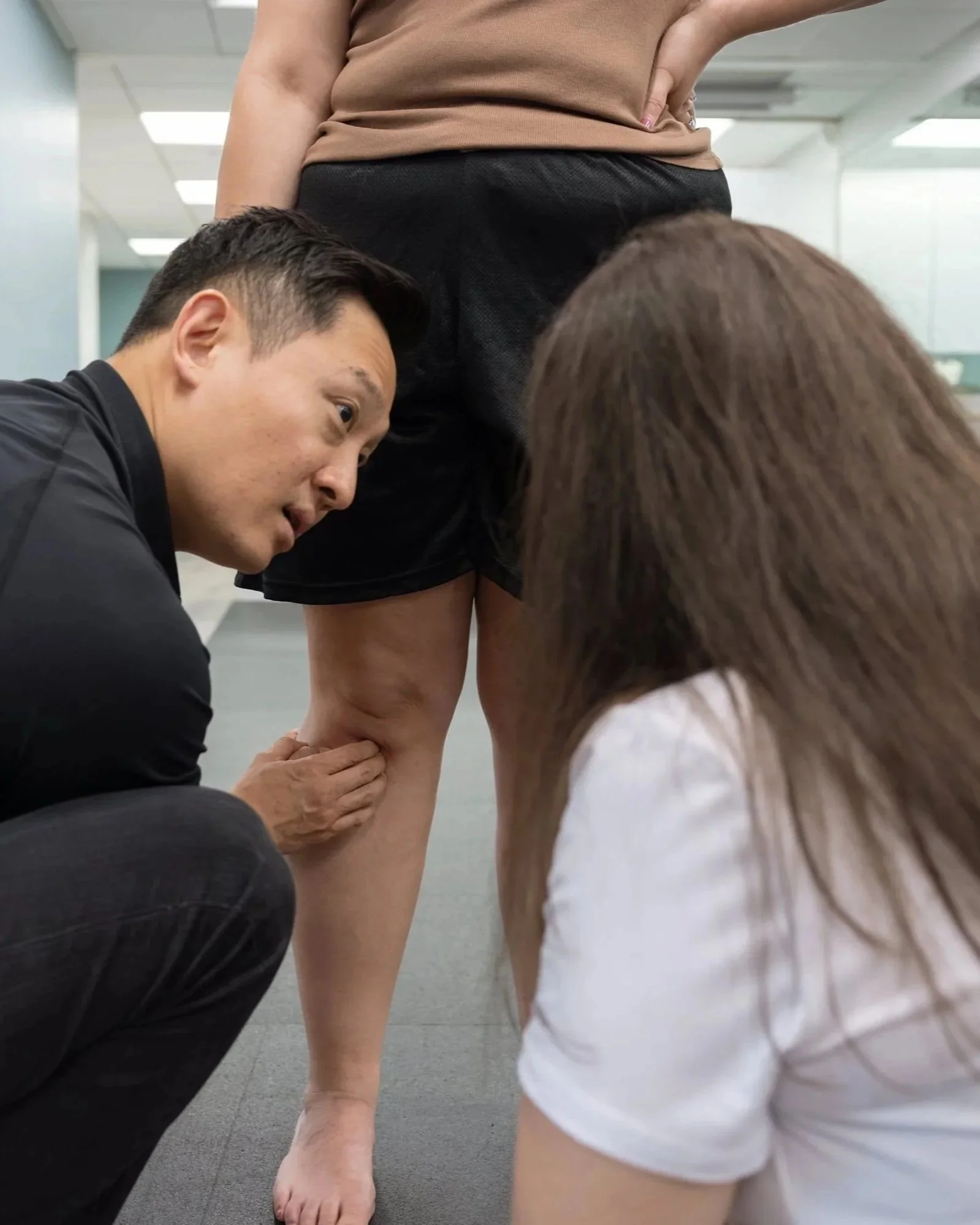
Hands-on work and stabilization training, plus dry needling or other advanced methods when your case calls for them, to remove what’s keeping your body from doing what it already knows how to do. All in the same hour, with the same clinician.
03 — We clear the way.
Step by step, we raise the challenge as your body adapts, until you’re back to what matters (a pain-free walk, a return to the court, a longer drive, etc) and have what you need to stay there.
04 — We guide you forward.
That's what the
first hour is for.
Finding what’s getting in your body’s way takes time.